Admin
Admin
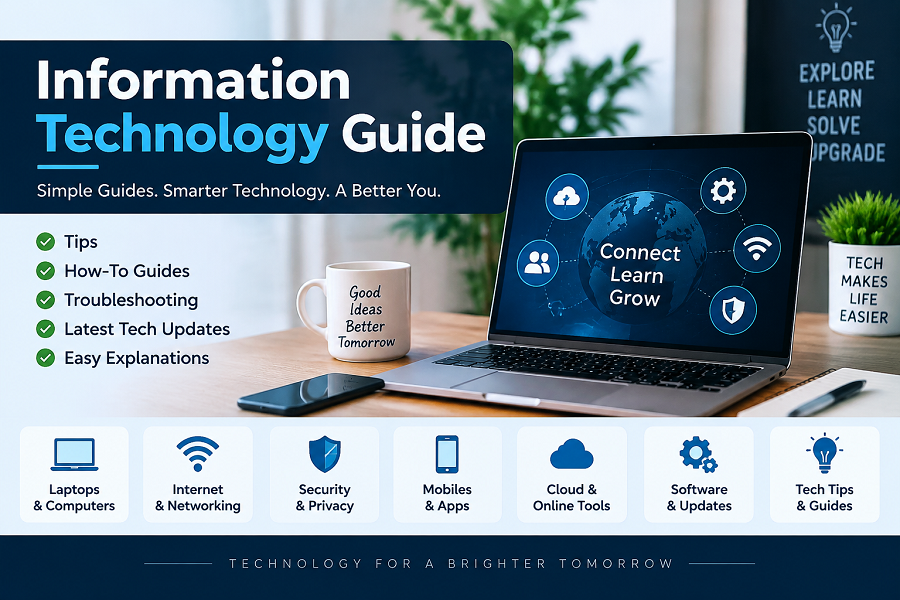
Information technology has become one of the most important parts of modern life. From smartphones and online banking to artificial intelligence and cloud services, IT systems support how people communicate, work, learn, and run businesses.
For individuals, understanding information technology helps build digital skills and career opportunities. For organizations, IT provides the tools needed to improve productivity, security, customer service, and decision-making.
This information technology guide explains the fundamentals of IT, its major components, real-world applications, career paths, and future developments in simple language.
What Is Information Technology?
Information technology (IT) refers to the use of computers, software, networks, databases, and digital systems to create, store, process, protect, and exchange information.
In simple terms, IT helps people and organizations manage information using technology.
Examples of information technology include:
- Computers and laptops
- Mobile applications
- Internet networks
- Cloud storage systems
- Business software
- Cybersecurity tools
- Database systems
- Artificial intelligence applications
Almost every industry today depends on information technology, including healthcare, banking, education, manufacturing, government, and entertainment.
Why Is Information Technology Important?
Technology has changed the way people and businesses operate.
Faster Communication
IT allows instant communication through:
- Messaging platforms
- Video meetings
- Collaboration tools
Businesses can connect with employees and customers around the world.
Better Data Management
Organizations generate large amounts of information every day.
IT systems help businesses:
- Store data securely
- Organize information
- Analyze trends
- Make better decisions
Database systems and cloud platforms allow companies to access important information quickly.
Increased Productivity
Technology reduces manual work through automation.
Examples include:
- Automated accounting systems
- Customer relationship management software
- Digital inventory systems
- Online workflow tools
These solutions save time and reduce errors.
Improved Security
Cybersecurity is a major part of information technology.
IT professionals protect systems from:
- Data theft
- Malware
- Unauthorized access
- Online attacks
Strong security practices help protect personal and business information.
Main Components of Information Technology
Information technology includes several important areas.
| Hardware | Physical computer equipment |
| Software | Programs and applications |
| Networking | Connecting devices and systems |
| Databases | Storing and managing information |
| Cloud Computing | Providing online computing services |
| Cybersecurity | Protecting digital systems |
| IT Support | Maintaining technology systems |
Computer Hardware
Hardware refers to the physical parts of a computer system.
Examples include:
- Desktop computers
- Laptops
- Servers
- Storage devices
- Routers
- Mobile devices
Hardware provides the foundation for running software and processing information.
Businesses use specialized hardware systems for:
- Data storage
- Communication
- Security monitoring
- Business operations
Software and Applications
Software provides instructions that tell computers what to do.
Common types of software include:
Operating Systems
Examples:
- Windows
- macOS
- Linux
- Android
- iOS
Operating systems manage computer resources and allow users to run applications.
Business Software
Companies use software for:
- Accounting
- Human resources
- Customer management
- Project management
- Inventory control
Examples include enterprise resource planning (ERP) systems and customer relationship management (CRM) platforms.
Computer Networking
Networking connects computers and devices so they can share information.
Important networking concepts include:
Local Area Network (LAN)
A LAN connects devices within a limited area, such as:
- Offices
- Schools
- Homes
Wide Area Network (WAN)
A WAN connects networks over larger geographic areas.
The Internet is the largest example of a global network.
Wireless Networks
WiFi technology allows devices to connect without physical cables.
Wireless networks are widely used in:
- Homes
- Offices
- Airports
- Public spaces
Database Management
Databases store and organize information.
Organizations use databases to manage:
- Customer information
- Employee records
- Financial data
- Product information
Database technologies help businesses search, update, and analyze information efficiently.
Popular database systems include:
- MySQL
- PostgreSQL
- Microsoft SQL Server
- Oracle Database
Cloud Computing
Cloud computing allows users to access computing resources through the internet.
Instead of storing everything on local computers, organizations can use remote servers.
Benefits of cloud computing include:
- Lower infrastructure costs
- Flexible storage
- Remote access
- Improved scalability
Common cloud services include:
- Cloud storage
- Online applications
- Virtual servers
- Data backup solutions
Cybersecurity
Cybersecurity protects computers, networks, and data from digital threats.
Common cybersecurity practices include:
- Strong passwords
- Multi-factor authentication
- Software updates
- Data encryption
- Security monitoring
Cybersecurity professionals help organizations prevent and respond to cyber threats.
Applications of Information Technology
Information technology is used across many industries.
Information Technology in Healthcare
Hospitals use IT for:
- Electronic health records
- Medical software
- Digital appointments
- Remote healthcare services
Technology helps healthcare providers manage information more efficiently.
Information Technology in Education
Schools and universities use IT for:
- Online learning platforms
- Digital classrooms
- Student management systems
- Research tools
Students can access educational resources from anywhere.
Information Technology in Banking
Banks depend heavily on IT systems.
Examples include:
- Online banking
- Mobile payment systems
- Fraud detection
- Digital transactions
Security is especially important because financial systems handle sensitive information.
Information Technology in Business
Businesses use IT to improve:
- Operations
- Marketing
- Customer service
- Data analysis
- Communication
Small businesses can use affordable technology solutions to compete with larger companies.
Information Technology Careers
The IT industry offers many career opportunities.
Software Developer
Software developers create applications and systems.
Skills include:
- Programming languages
- Software design
- Problem-solving
Network Administrator
Network administrators manage computer networks.
Responsibilities include:
- Network setup
- Maintenance
- Troubleshooting
- Security management
Database Administrator
Database administrators manage data systems.
They focus on:
- Database performance
- Data security
- Backup systems
Cybersecurity Specialist
Cybersecurity professionals protect organizations from digital threats.
Common roles include:
- Security analyst
- Ethical hacker
- Security engineer
Cloud Specialist
Cloud professionals manage cloud-based systems and services.
Skills include:
- Cloud platforms
- Virtualization
- Infrastructure management
Essential IT Skills for Beginners
People starting in IT should develop both technical and professional skills.
Technical Skills
Important technical skills include:
- Computer fundamentals
- Networking basics
- Programming knowledge
- Database concepts
- Cybersecurity awareness
- Cloud computing basics
Soft Skills
Successful IT professionals also need:
- Communication skills
- Problem-solving ability
- Teamwork
- Time management
- Continuous learning
Technology changes quickly, so learning is a lifelong process.
Information Technology Trends
The IT industry continues to evolve rapidly.
Artificial Intelligence
Artificial intelligence helps computers perform tasks that traditionally require human intelligence.
Examples include:
- Chatbots
- Data analysis
- Automation
- Recommendation systems
Internet of Things (IoT)
IoT connects physical devices through the internet.
Examples:
- Smart homes
- Wearable devices
- Industrial sensors
Edge Computing
Edge computing processes data closer to where it is created instead of sending everything to centralized servers.
Benefits include:
- Faster response times
- Reduced network usage
- Improved performance
Automation
Businesses increasingly use automation to improve efficiency.
Automation helps with:
- Repetitive tasks
- Data processing
- Customer support
- Manufacturing operations
How Businesses Can Use Information Technology Effectively
Businesses should approach IT strategically.
Identify Business Needs
Technology should solve real problems.
Companies should evaluate:
- Current challenges
- Customer needs
- Growth goals
Invest in Security
Every organization should prioritize cybersecurity.
Important steps include:
- Regular backups
- Employee training
- Security updates
Train Employees
Technology works best when employees understand how to use it.
Training improves:
- Productivity
- Security awareness
- System adoption
Use Scalable Solutions
Businesses should choose technology that can grow with their needs.
Cloud services and flexible software solutions can support expansion.
Information Technology Challenges
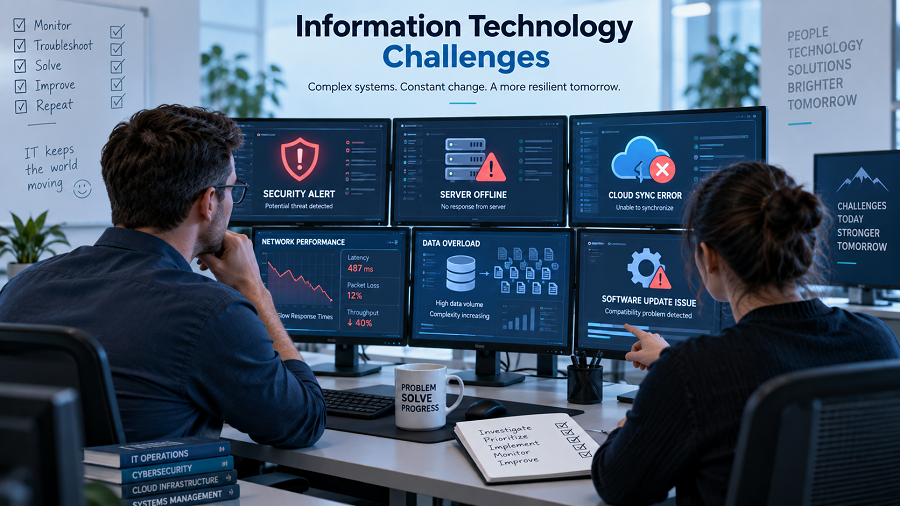
Although IT provides many benefits, organizations face challenges.
Cybersecurity Risks
Increasing digital activity creates more security concerns.
Companies must continuously improve protection methods.
High Implementation Costs
Advanced technology systems may require investment in:
- Hardware
- Software
- Training
- Maintenance
Technology Changes
Rapid innovation means organizations must regularly update their systems and skills.
Future of Information Technology
The future of IT will continue to focus on smarter, faster, and more secure systems.
Future developments may include:
- Advanced artificial intelligence
- More automation
- Stronger cybersecurity solutions
- Greater cloud adoption
- Improved digital connectivity
Organizations and professionals who continue learning will be better prepared for future changes.
Frequently Asked Questions (FAQs)
What is information technology in simple words?
Information technology is the use of computers, software, networks, and digital systems to manage and process information.
What are the main areas of information technology?
The main areas include hardware, software, networking, databases, cloud computing, cybersecurity, and IT support.
Is information technology a good career?
Yes. IT offers many career opportunities in software development, cybersecurity, networking, cloud computing, and data management.
Do I need programming skills to start in IT?
Programming is useful, but not every IT role requires coding. Areas like networking, support, cybersecurity, and administration may require different skills.
How does information technology help businesses?
IT helps businesses improve communication, automate processes, protect data, manage information, and provide better customer service.