Admin
Admin

Information technology has become one of the most important forces shaping the modern world. From mobile applications and online banking to artificial intelligence and cloud computing, technology influences how people work, communicate, learn, and conduct business.
In India, information technology has played a major role in economic growth, digital transformation, and employment opportunities. Millions of professionals work in software development, data management, cybersecurity, cloud services, IT consulting, and other technology-related fields.
For students, business owners, and professionals, understanding information technology is essential because digital skills are becoming valuable in almost every industry.
This guide explains what information technology means, why it matters, its major areas, career opportunities, required skills, and future developments.
Key Takeaways
- Information technology involves the use of computers, software, networks, and digital systems to manage information.
- IT supports almost every modern industry, including banking, healthcare, education, manufacturing, and government services.
- Major IT fields include software development, cloud computing, cybersecurity, artificial intelligence, and data analytics.
- India has become a global hub for IT services and technology professionals.
- Learning technical and communication skills can improve career opportunities in the IT sector.
- Future technologies like AI, automation, and cloud computing will continue changing the IT landscape.
What Is Information Technology?
Information technology refers to the use of computers, digital systems, software, networks, and electronic processes to create, store, process, protect, and exchange information.
Simply put, information technology helps organizations and individuals solve problems and improve efficiency.
Examples of information technology include:
- Using banking apps for digital payments
- Managing customer information through databases
- Hosting websites on cloud servers
- Protecting systems from cyber threats
- Developing software applications
- Using artificial intelligence tools for automation
Information technology is not only about computers. It includes the complete ecosystem that allows digital information to move, function, and remain secure.
Why Is Information Technology Important?
Technology has changed how organizations operate. Today, companies depend on digital systems for daily operations, customer services, communication, and decision-making.
Improves Business Efficiency
Businesses use information technology to automate tasks, reduce manual work, and improve productivity.
Examples:
- Online accounting systems
- Inventory management software
- Customer relationship management tools
- Automated reporting systems
These technologies help organizations save time and make better decisions.
Enables Digital Communication
Information technology allows people to communicate instantly across the world.
Examples include:
- Video conferencing
- Messaging platforms
- Collaboration software
Companies can now operate globally because technology removes geographical barriers.
Supports Data-Based Decisions
Modern organizations collect large amounts of data.
Information technology helps businesses:
- Store information securely
- Analyze customer behavior
- Identify trends
- Improve services
Data-driven decision-making has become an important advantage for companies.
Protects Digital Information
As organizations become more dependent on technology, protecting information becomes critical.
Cybersecurity professionals use IT systems to protect:
- Personal data
- Financial information
- Business records
- Government systems
Major Areas of Information Technology
Information technology includes many specialized fields. Each area offers different career paths and applications.
Software Development
Software development is one of the most recognized areas of information technology.
Software developers design, build, test, and maintain applications.
Examples:
- Mobile apps
- Websites
- Business software
- Gaming applications
- Enterprise systems
Common Programming Languages
Popular programming languages include:
- Python
- Java
- JavaScript
- C++
- C#
Career Roles
- Software Engineer
- Web Developer
- Mobile Application Developer
- Backend Developer
- Full-Stack Developer
Cloud Computing
Cloud computing allows organizations to use computing resources through the internet instead of maintaining only physical servers.
Popular cloud platforms include:
- Amazon Web Services (AWS)
- Microsoft Azure
- Google Cloud
Cloud technology helps businesses:
- Store data
- Run applications
- Scale services quickly
- Reduce infrastructure costs
Cloud Career Opportunities
- Cloud Engineer
- Cloud Architect
- Cloud Administrator
- DevOps Engineer
Cybersecurity
Cybersecurity focuses on protecting digital systems from unauthorized access, attacks, and data theft.
As cyber threats increase, organizations need professionals who can secure their technology infrastructure.
Cybersecurity Responsibilities
Professionals work on:
- Network protection
- Security monitoring
- Risk assessment
- Vulnerability testing
- Data protection
Career Roles
- Cybersecurity Analyst
- Ethical Hacker
- Security Engineer
- Information Security Specialist
Artificial Intelligence and Machine Learning
Artificial intelligence (AI) allows computers to perform tasks that traditionally require human intelligence.
Examples:
- Voice assistants
- Recommendation systems
- Image recognition
- Automated customer support
Machine learning enables systems to improve by learning from data.
AI Career Roles
- Machine Learning Engineer
- AI Developer
- Data Scientist
- AI Researcher
Data Analytics and Data Science
Data has become one of the most valuable resources for organizations.
Data professionals analyze information to discover patterns and support decision-making.
Common Tools
- SQL
- Python
- Excel
- Data visualization platforms
Career Opportunities
- Data Analyst
- Business Intelligence Analyst
- Data Scientist
- Database Specialist
Networking and IT Infrastructure
Networking involves connecting computers and devices so they can communicate and share resources.
Network professionals manage:
- Internet connections
- Servers
- Internal networks
- Hardware systems
Career Roles
- Network Administrator
- System Engineer
- Infrastructure Specialist
Database Management
Organizations store huge amounts of information in databases.
Database professionals ensure that data remains organized, available, and secure.
Responsibilities
- Database design
- Data backup
- Performance improvement
- Security management
Career Roles
- Database Administrator
- Database Engineer
- Data Architect
Information Technology in India
India has become one of the world’s major technology centers. The country has a large pool of skilled professionals working in software services, digital solutions, research, and technology consulting.
Indian IT companies provide services to businesses worldwide, including:
- Software development
- IT consulting
- Cloud services
- Business process solutions
- Digital transformation services
Major technology hubs in India include:
- Bengaluru
- Hyderabad
- Pune
- Chennai
- Noida
- Mumbai
The growth of startups, digital services, and technology adoption has increased demand for IT skills across many sectors.
Career Opportunities in Information Technology
Information technology offers career options for people with different interests.
Popular IT Career Paths
| Software Developer | Programming, databases, software design |
| Data Analyst | SQL, analytics, visualization |
| Cloud Engineer | Cloud platforms, networking |
| Cybersecurity Specialist | Security, networks |
| Web Developer | HTML, CSS, JavaScript |
| IT Support Engineer | Hardware, troubleshooting |
| AI Engineer | Programming, machine learning |
Skills Required for Information Technology Careers
A successful IT professional needs both technical and personal skills.
Technical Skills
Programming
Programming helps professionals create software and automate tasks.
Important languages:
- Python
- Java
- JavaScript
- SQL
Database Knowledge
Understanding databases is useful for many IT roles.
Important concepts:
- Data storage
- Database management
- Queries
- Data security
Networking Basics
Networking knowledge helps professionals understand how systems communicate.
Learn:
- Internet concepts
- Servers
- Network security
- Communication protocols
Cloud Knowledge
Cloud skills are becoming increasingly important as many businesses move services online.
Soft Skills
Technical ability alone is not enough.
Important soft skills include:
- Communication
- Teamwork
- Problem-solving
- Time management
- Adaptability
Technology professionals often work with teams, clients, and business leaders.
How to Start Learning Information Technology
Understand Basic Computer Concepts
Start with:
- Operating systems
- Internet basics
- Computer hardware
- Software concepts
Choose a Specialization
Avoid trying to learn every technology.
Choose one area:
- Programming
- Cloud computing
- Cybersecurity
- Data analytics
- Artificial intelligence
Practice Through Projects
Projects help convert knowledge into practical skills.
Examples:
- Create a website
- Build a mobile app
- Analyze public datasets
- Create a cloud project.
- Develop automation scripts
Earn Relevant Certifications
Certifications can improve professional credibility.
Examples:
- Cloud certifications
- Cybersecurity certifications
- Database certifications
- Programming certifications
Keep Learning
Technology changes quickly.
Successful IT professionals regularly update their knowledge through:
- Online courses
- Technical communities
- Practical projects
- Industry resources
Future Trends in Information Technology
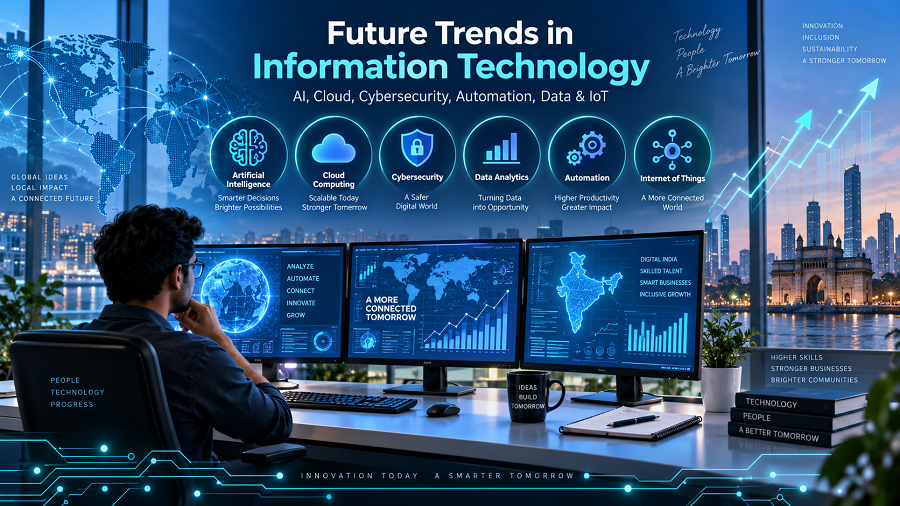
Information technology will continue evolving as new technologies emerge.
Artificial Intelligence Growth
AI is expected to influence many industries by improving automation, decision-making, and customer experiences.
Cloud Expansion
More businesses are adopting cloud systems because they provide flexibility and scalability.
Increased Cybersecurity Needs
As more information moves online, protecting digital systems will remain important.
Automation and Digital Transformation
Organizations are using automation to improve productivity and reduce repetitive work.
Internet of Things (IoT)
IoT connects physical devices through digital networks.
Examples:
- Smart homes
- Industrial sensors
- Connected vehicles
Challenges in Information Technology
Although IT offers many opportunities, it also has challenges.
Rapid Technology Changes
Professionals must continuously learn because tools and platforms change frequently.
Cybersecurity Risks
Organizations must constantly improve their security systems to counter new threats.
Skill Requirements
Employers increasingly look for practical skills, not only academic qualifications.
Frequently Asked Questions (FAQs)
What is information technology in simple words?
Information technology is the use of computers, software, networks, and digital systems to create, manage, store, and protect information.
Why is information technology important?
IT helps businesses operate efficiently, communicate globally, manage data, and provide digital services.
What careers are available in information technology?
Popular IT careers include software developer, cloud engineer, cybersecurity specialist, data analyst, AI engineer, and network administrator.
Is information technology a good career option in India?
Yes. IT provides opportunities across many industries, especially for people with strong technical and problem-solving skills.
What skills should beginners learn for IT?
Beginners should learn the basics of computers, programming fundamentals, databases, networking, and communication skills.