Admin
Admin
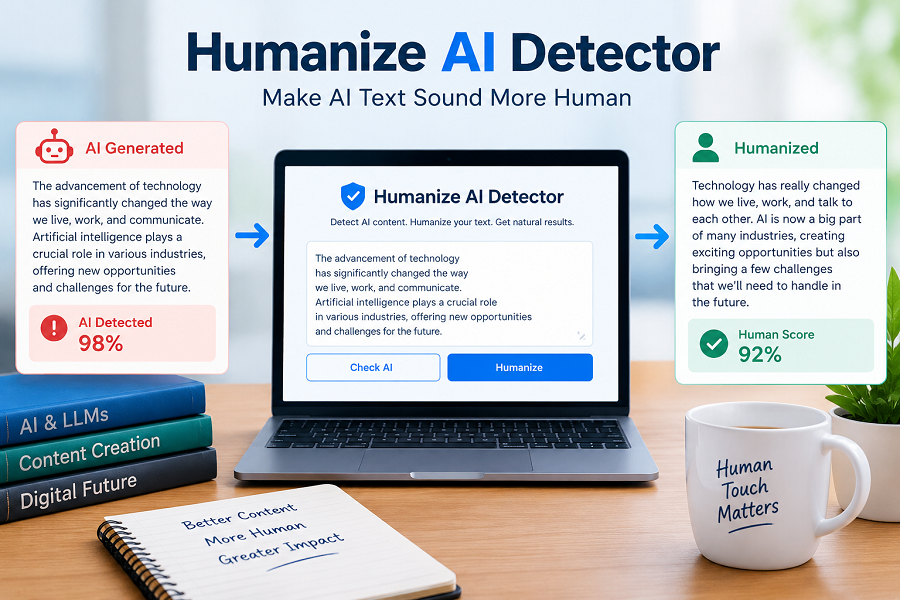
Artificial intelligence has changed the way people write articles, emails, reports, social media posts, and marketing content. Tools like ChatGPT, Gemini, and Claude can generate text within seconds, but many users notice one common problem: AI-written content can sometimes feel repetitive, formal, or less personal. This is where the concept of a humanized AI detector becomes popular.
A humanized AI detector generally refers to tools and techniques that analyze AI-generated text and help improve it so the writing feels more natural, conversational, and closer to human communication.
However, it is important to understand that AI detection technology is not perfect. Different AI detectors can produce different results, and no tool can guarantee a specific detection outcome in every situation.
The main goal should be creating useful, authentic, high-quality content that provides value to readers.
What Is a Humanize AI Detector?
A humanized AI detector combines two ideas:
AI detection – analyzing whether text appears to have patterns commonly associated with AI-generated writing.
AI humanization – improving AI-generated text to make it clearer, more natural, and easier for people to read.
AI humanizer tools usually rewrite sentences, adjust wording, improve sentence flow, and make content sound less robotic. Many platforms describe these tools as systems that transform AI drafts into more natural writing while preserving the original meaning.
For example:
AI-style sentence:
“In today’s rapidly evolving digital landscape, businesses must leverage innovative solutions to maximize productivity.”
More natural version:
“Today, businesses need practical digital tools that help teams save time and work more efficiently.”
The second version sounds more conversational because it uses simpler language and a more direct tone.
Why Do People Use Humanize AI Detector Tools?
AI writing assistants are powerful, but their first drafts often need editing.
People use humanized AI tools for several reasons.
Improve Readability
AI-generated text may contain:
- Long sentences
- Repeated phrases
- Generic introductions
- Overly formal wording
Humanizing tools help make writing easier to understand.
For example, a blog reader usually prefers:
“Here are three simple ways to improve your website speed.”
instead of:
“In this comprehensive guide, we will explore multiple strategies that can potentially enhance the overall performance optimization of your website.”
Create a More Personal Writing Style
Human writing usually includes:
- Personal examples
- Natural transitions
- Different sentence lengths
- Clear opinions or explanations
AI drafts often follow predictable patterns.
Human editing helps add personality and brand voice.
Improve SEO Content Quality
Search engines focus on helpful, valuable content rather than simply whether the text was created by AI.
Good SEO content should include:
- Original insights
- Accurate information
- Clear structure
- Real examples
- Helpful answers
Using AI as an assistant and then improving the content with human expertise can create stronger articles.
How Does a Humanize AI Detector Work?
Most AI humanization tools analyze writing patterns and make adjustments.
Common techniques include:
Sentence Structure Changes
AI often produces sentences with similar lengths and structures.
Human editors naturally create variation.
Example:
AI pattern:
“AI tools help businesses save time. AI tools improve productivity. AI tools support marketing teams.”
Human style:
“AI tools can save businesses significant time. They also help marketing teams create campaigns faster and manage repetitive tasks more efficiently.”
Vocabulary Improvement
AI-generated content may repeatedly use certain phrases.
Humanization tools may replace repetitive words with more natural alternatives.
Example:
Instead of:
“Utilize innovative solutions”
Use:
“Use practical solutions”
Tone Adjustment
Different content needs different tones.
A technical article may require a professional tone.
A lifestyle blog may need a friendly style.
Humanization tools can help adjust:
- Formal writing
- Conversational writing
- Marketing language
- Educational explanations
Humanize AI Detector vs AI Detector: What Is the Difference?
| Main purpose | Analyze text patterns | Improve writing style |
| Output | AI probability or analysis | Revised content |
| Used by | Educators, publishers, businesses | Writers, marketers, creators |
| Focus | Detection | Readability and quality |
Both tools solve different problems.
An AI detector asks:
“Does this text appear AI-generated?”
A humanizer asks:
“How can this text sound more natural?”
Benefits of Using Humanize AI Detector Tools
Faster Content Editing
Writers can create a first draft with AI and spend less time rewriting basic sentences.
The workflow becomes:
AI draft → Human review → Improved article
Better Reader Experience
Readers prefer content that feels:
- Clear
- Helpful
- Authentic
- Easy to follow
Humanized writing improves engagement.
Maintain Brand Voice
Businesses often need consistent communication.
Humanization helps adapt AI drafts to match:
- Company tone
- Customer language
- Marketing style
Helps Non-Native English Writers
Many international writers use AI tools to improve grammar and structure.
Humanization can help create smoother English while keeping the writer’s original ideas.
Limitations of Humanize AI Detector Tools
Although these tools are useful, they are not perfect.
AI Detectors Can Make Mistakes
AI detection systems analyze patterns, not the actual history of who wrote the content.
A human-written article may sometimes receive an incorrect AI score.
Research and discussions on AI detection have highlighted challenges related to reliability and the evolving patterns of AI writing.
Humanization Does Not Replace Expertise
A tool cannot automatically add:
- Real experience
- Professional knowledge
- Original research
- Unique opinions
Human review remains important.
Some Tools Over-Edit Content
Poor rewriting tools may:
- Change meanings
- Remove important details
- Introduce incorrect information
Always review the final version before publishing.
How to Humanize AI Content Properly
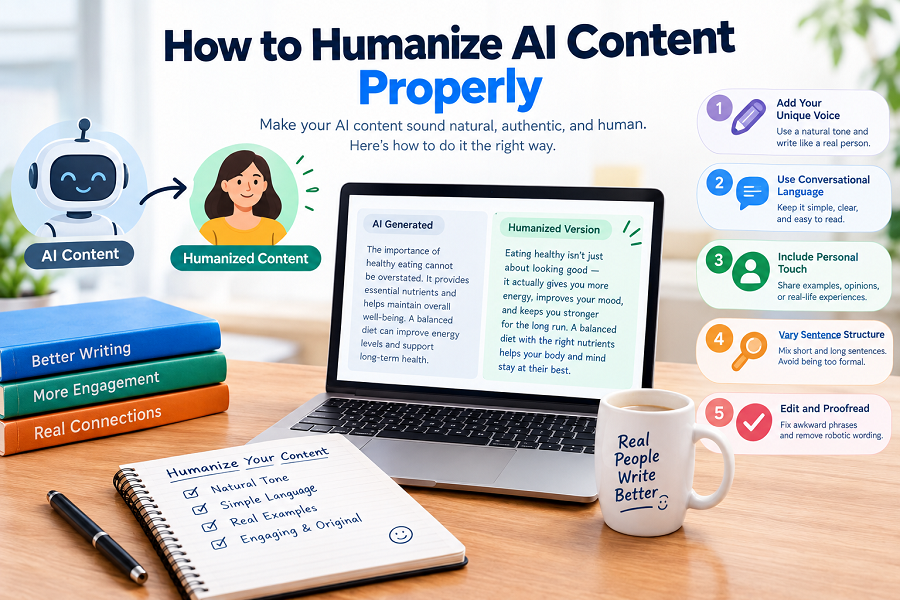
The best approach combines AI assistance with human creativity.
Start With a Strong AI Prompt
Instead of asking:
“Write an article about smartphones.”
Try:
Write a beginner-friendly article about smartphones for Indian users. Include practical examples, simple language, and real-world advice.”
Better instructions create better drafts.
Add Personal Experience
Include:
- Examples
- Case studies
- Lessons learned
- Local context
For Indian audiences, examples related to Indian businesses, users, and daily life make content more relevant.
Simplify Complex Sentences
Replace complicated words with clear alternatives.
Example:
Before:
“Implementation of optimization methodologies facilitates enhanced operational efficiency.”
After:
“Optimization methods help businesses work more efficiently.”
Fact Check Everything
AI can generate incorrect information.
Before publishing:
- Verify numbers
- Check dates
- Confirm product details
- Review sources
Best Practices for Using AI Humanization Tools
| Review every article manually | Prevent errors |
| Keep your own writing style | Build authenticity |
| Add original examples | Improve value |
| Verify facts | Maintain trust |
| Focus on readers first | Better SEO results |
Who Should Use Humanize AI Detector Tools?
These tools can help:
Bloggers
Useful for improving AI-assisted articles before publishing.
Digital Marketers
Helps create smoother:
- Ads
- Emails
- Product descriptions
Students and Researchers
Can improve clarity and writing quality, but academic rules about AI assistance should always be followed.
Businesses
Useful for customer communication and content workflows.
Is Humanize AI Detector Free?
Many AI humanization tools offer free versions with limitations, while advanced features may require paid plans.
Free versions often include:
- Limited word counts
- Basic rewriting
- Simple analysis
Premium versions may provide:
- More editing options
- Larger content limits
- Additional writing features
Always check the provider’s current pricing before choosing a tool.
Future of AI Humanization Technology
As AI-generated content becomes more common, the focus is shifting from simply detecting AI text to improving collaboration between humans and AI.
The future will likely focus on:
- Better AI writing assistants
- Stronger editing workflows
- More personalized content creation
- Improved transparency about AI usage
The most successful writers will not simply avoid AI. They will learn how to combine AI speed with human creativity.
Final Thoughts
A humanized AI detector is not just about changing AI-generated text. The real purpose is creating content that connects with people.
AI can help generate ideas, organize information, and speed up writing. Humans provide judgment, experience, creativity, and authenticity.
The best content strategy is simple:
Use AI for assistance. Use human thinking for quality.
FAQs About Humanize AI Detector
What is a humanize AI detector?
A humanized AI detector refers to a tool that analyzes AI-generated text and helps improve its naturalness, readability, and human-like quality.
Can a humanized AI tool guarantee passing every AI detector?
No. AI detection systems vary, and results can change depending on the tool and content. No system can guarantee perfect results.
Does humanizing AI content improve SEO?
Humanized content can improve SEO indirectly by making articles clearer, more useful, and more engaging for readers.
Is AI-generated content allowed for websites?
AI-generated content can be used when it provides value, accuracy, and helpful information. Websites should focus on quality rather than producing low-value automated content.
Can AI humanizers remove all AI patterns?
No tool can guarantee the complete removal of AI patterns. Human editing and original insights remain important.