Admin
Admin
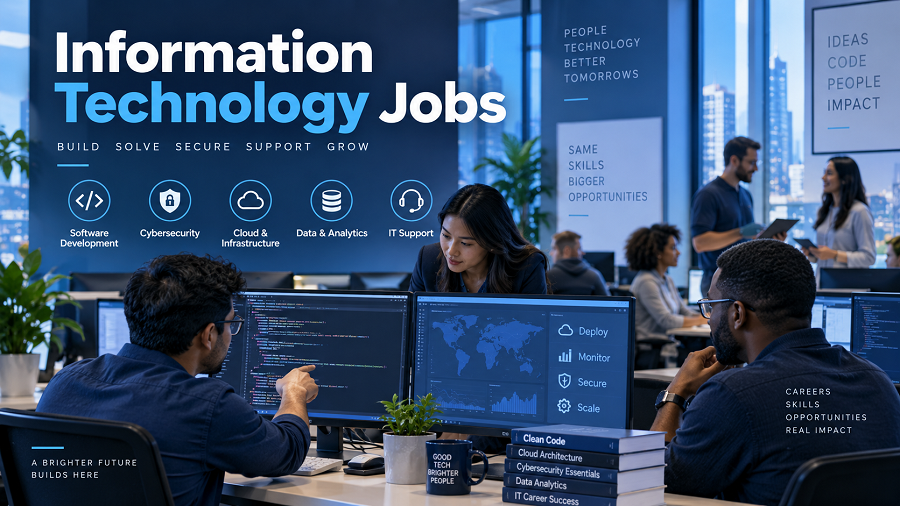
Information technology has become one of the most important career fields in India. From software development and cloud computing to cybersecurity and artificial intelligence, technology professionals are needed across almost every industry.
Companies today depend on digital systems to manage operations, store data, communicate with customers, and create new products. Because of this digital transformation, information technology jobs are available not only in software companies but also in banking, healthcare, education, manufacturing, government, and startups.
For students, fresh graduates, and working professionals, IT offers many career paths. However, success in this field requires more than just a degree. Practical skills, continuous learning, and problem-solving ability are becoming increasingly important for building a long-term technology career.
This guide explains the different types of information technology jobs, the required skills and qualifications, career opportunities, and how to start an IT career in India.
Key Takeaways
- Information technology jobs cover software, data, networks, cybersecurity, cloud, and support roles.
- IT careers are available in almost every industry, not only in technology companies.
- Programming, database management, cloud computing, cybersecurity, and communication skills are valuable for IT professionals.
- Freshers can enter IT through degrees, certifications, internships, and personal projects.
- Continuous learning is essential because technology changes quickly.
- Choosing a specialization can improve long-term career growth.
What Are Information Technology Jobs?
Information technology jobs involve using computers, software, networks, databases, and digital systems to solve business and technical problems.
An IT professional may develop applications, manage servers, protect company data, analyze information, maintain computer systems, or help users solve technical issues.
Common areas in information technology include:
- Software development
- Web development
- Database management
- Cloud computing
- Cybersecurity
- Network administration
- Data analytics
- Artificial intelligence
- IT support
- System administration
Unlike some careers that are limited to a single industry, IT professionals work across many sectors because almost every organization uses technology today.
Why Choose Information Technology as a Career?
Information technology remains attractive because technology has become essential for modern businesses.
Wide Range of Career Options
IT is not limited to coding. People with different interests can choose different paths.
For example:
- Creative people may enjoy UI/UX design or web development.
- Analytical thinkers may prefer data science or cybersecurity.
- Problem solvers may choose software engineering.
- Communication-focused professionals may work in IT consulting or project management.
Opportunities Across Industries
IT professionals are required in:
| Banking | Software Engineer, Cybersecurity Analyst |
| Healthcare | Health IT Specialist, Data Analyst |
| Education | Application Developer, System Administrator |
| Manufacturing | Automation Engineer, IT Support |
| E-commerce | Web Developer, Cloud Engineer |
| Government | Digital Systems Specialist |
Strong Demand for Technical Skills
Modern companies need professionals who can build, manage, and secure digital systems.
Skills related to programming, cloud computing, cybersecurity, artificial intelligence, and data management are increasingly important in technology careers.
Types of Information Technology Jobs
There are many IT career paths to choose from, depending on your interests and skills.
Software Developer
Software developers create computer programs, websites, and mobile applications.
Responsibilities:
- Writing and testing code
- Fixing software problems
- Designing applications
- Improving existing systems
Common Skills:
- Java
- Python
- JavaScript
- SQL
- Git
- Problem-solving
Software development remains one of the most popular entry points for IT professionals.
Web Developer
Web developers create and maintain websites and web applications.
There are three common areas:
Front-End Developer
Works on the visible parts of websites.
Skills:
- HTML
- CSS
- JavaScript
- React
Back-End Developer
Manages servers and databases.
Skills:
- Python
- Java
- Node.js
- SQL
Full-Stack Developer
Works with both front-end and back-end technologies.
Data Analyst
Data analysts convert raw information into useful business insights.
Responsibilities:
- Collecting data
- Creating reports
- Finding trends
- Supporting business decisions
Important Skills:
- Excel
- SQL
- Python
- Data visualization tools
Data-related careers are growing because organizations increasingly depend on information for decision-making.
Artificial Intelligence and Machine Learning Engineer
AI and machine learning professionals build systems that can learn from data.
Examples include:
- Recommendation systems
- Chatbots
- Image recognition
- Automated decision systems
Required Skills:
- Python
- Mathematics
- Statistics
- Machine learning algorithms
- Data handling
AI is becoming an important technology area, creating new opportunities for skilled professionals.
Cloud Computing Engineer
Cloud professionals manage online infrastructure and services.
Popular cloud platforms include:
- Amazon Web Services (AWS)
- Microsoft Azure
- Google Cloud
Responsibilities:
- Managing cloud systems
- Deploying applications
- Improving security
- Monitoring performance
Cloud knowledge is valuable because many businesses are moving their systems from traditional servers to cloud platforms.
Cybersecurity Specialist
Cybersecurity professionals protect systems, networks, and data from attacks.
Responsibilities:
- Monitoring security threats
- Testing vulnerabilities
- Managing security tools
- Creating protection strategies
Important skills:
- Network security
- Ethical hacking basics
- Security monitoring
- Risk management
As digital systems expand, cybersecurity has become a critical area for organizations.
IT Support Specialist
IT support professionals help users solve computer and software problems.
Typical tasks:
- Installing software
- Troubleshooting hardware issues
- Managing user accounts
- Maintaining office technology
This role is often a starting point for freshers entering the IT industry.
Database Administrator
Database administrators manage company data systems.
Responsibilities include:
- Database maintenance
- Backup management
- Performance monitoring
- Data security
Important technologies:
- MySQL
- Oracle
- PostgreSQL
- SQL Server
Information Technology Jobs for Freshers
Many students worry about getting their first IT job without experience. However, fresh graduates can enter the industry by building practical skills.
Best Entry-Level IT Jobs
| Junior Software Developer | Programming, Git, SQL |
| IT Support Engineer | Hardware, Networking |
| Web Developer | HTML, CSS, JavaScript |
| Data Analyst Intern | Excel, SQL, Python |
| Junior Tester | Testing concepts, Automation basics |
| Cloud Support Associate | Cloud fundamentals |
Qualifications Required for IT Jobs
A traditional path into IT includes:
- Bachelor of Technology (B.Tech)
- Bachelor of Engineering (B.E.)
- Bachelor of Computer Applications (BCA)
- Bachelor of Science in Computer Science
- Master of Computer Applications (MCA)
However, many employers also value practical skills, certifications, and project experience.
A candidate with strong technical abilities and a good portfolio can improve their chances even without a traditional computer science background.
Important Skills Needed for Information Technology Jobs
Technical Skills
Programming
Programming is one of the most valuable IT skills.
Popular languages:
- Python
- Java
- JavaScript
- C++
- SQL
Database Knowledge
Almost every organization uses databases.
Important concepts:
- Data storage
- Queries
- Database design
- Security
Cloud Skills
Understanding cloud platforms can help candidates qualify for modern IT roles.
Learn:
- Cloud concepts
- Virtual machines
- Storage
- Security basics
Cybersecurity Awareness
Even professionals outside security roles should understand basic security principles.
Examples:
- Password protection
- Data privacy
- Network safety
Soft Skills
Technical knowledge alone is not enough.
Important soft skills include:
- Communication
- Teamwork
- Problem-solving
- Adaptability
- Time management
IT professionals often work with clients, managers, and teams, making communication extremely valuable.
How to Start a Career in Information Technology
Choose Your Interest Area
Do not try to learn everything at once.
Choose a direction:
- Coding
- Data
- Cloud
- Cybersecurity
- Networking
- AI
Learn Core Skills
Start with fundamentals.
For example:
Software Development:
- Programming
- Data structures
- Databases
Cloud:
- Networking
- Linux
- Cloud platforms
Data:
- Excel
- SQL
- Python
Build Real Projects
Projects demonstrate practical ability.
Examples:
- Build a website
- Create a mobile application.
- Analyze a dataset
- Develop a chatbot
- Create a cloud deployment project.
Create a Professional Portfolio
Include:
- GitHub projects
- Resume
- LinkedIn profile
- Certifications
- Internship experience
Apply for Internships and Entry-Level Jobs
Internships help students understand real workplace environments.
Look for:
- Software internships
- IT support roles
- Data internships
- Cloud trainee positions
Future of Information Technology Jobs in India
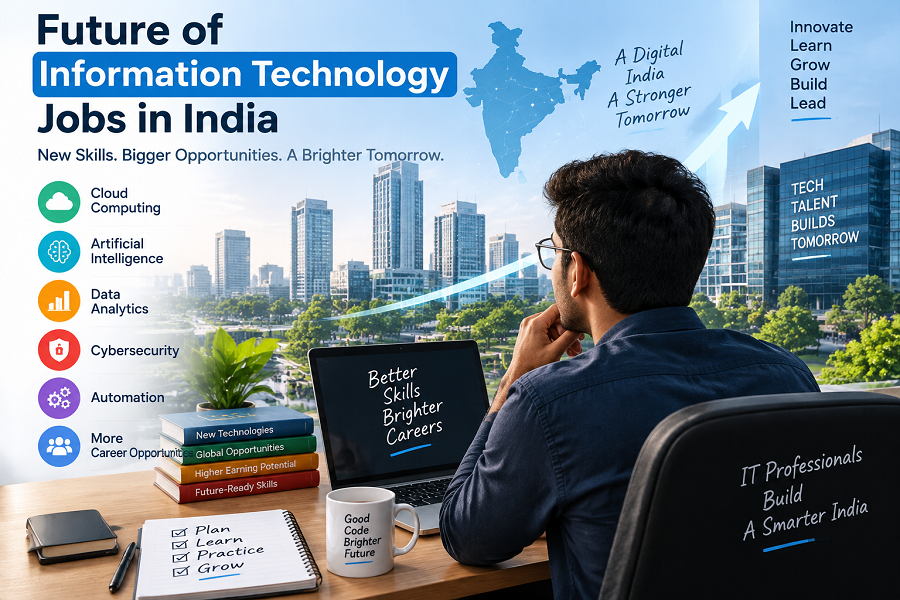
The future of IT careers will be influenced by technologies such as:
- Artificial intelligence
- Cloud computing
- Automation
- Cybersecurity
- Data analytics
However, technology changes quickly. Professionals who continue learning and adapting will have better career opportunities.
Government initiatives in India also support technology skill development and training programs in emerging technologies.
Common Mistakes to Avoid When Starting an IT Career
Learning Too Many Technologies
Many beginners jump between programming languages and tools.
Better approach:
- Master fundamentals first.
- Build strong skills in one area.
Ignoring Practical Experience
Certificates are useful, but projects show ability.
Create things that demonstrate what you can do.
Avoiding Communication Skills
Technical professionals need to explain ideas clearly.
Good communication improves teamwork and career growth.
Frequently Asked Questions (FAQs)
1. What are the best information technology jobs for freshers?
Some good entry-level IT jobs include software developer, web developer, IT support engineer, junior data analyst, and testing roles.
Do I need a computer science degree for IT jobs?
A computer science degree can help, but many employers also consider skills, certifications, projects, and practical experience.
Which IT skills are most valuable in India?
Programming, cloud computing, cybersecurity, databases, artificial intelligence, and data analytics are valuable technology skills.
Can non-technical students get IT jobs?
Yes. Non-technical students can enter fields such as testing, IT support, business analysis, digital tools, and some programming roles by developing relevant skills.
Are IT jobs only available in software companies?
No. Banks, hospitals, government departments, education companies, manufacturing firms, and startups also hire IT professionals.
How can I increase my chances of getting an IT job?
Learn industry-relevant skills, build projects, complete internships, improve your communication skills, and keep your resume up to date.